
Architectural Project Process: A Step-by-Step Guide from Idea to Implementation
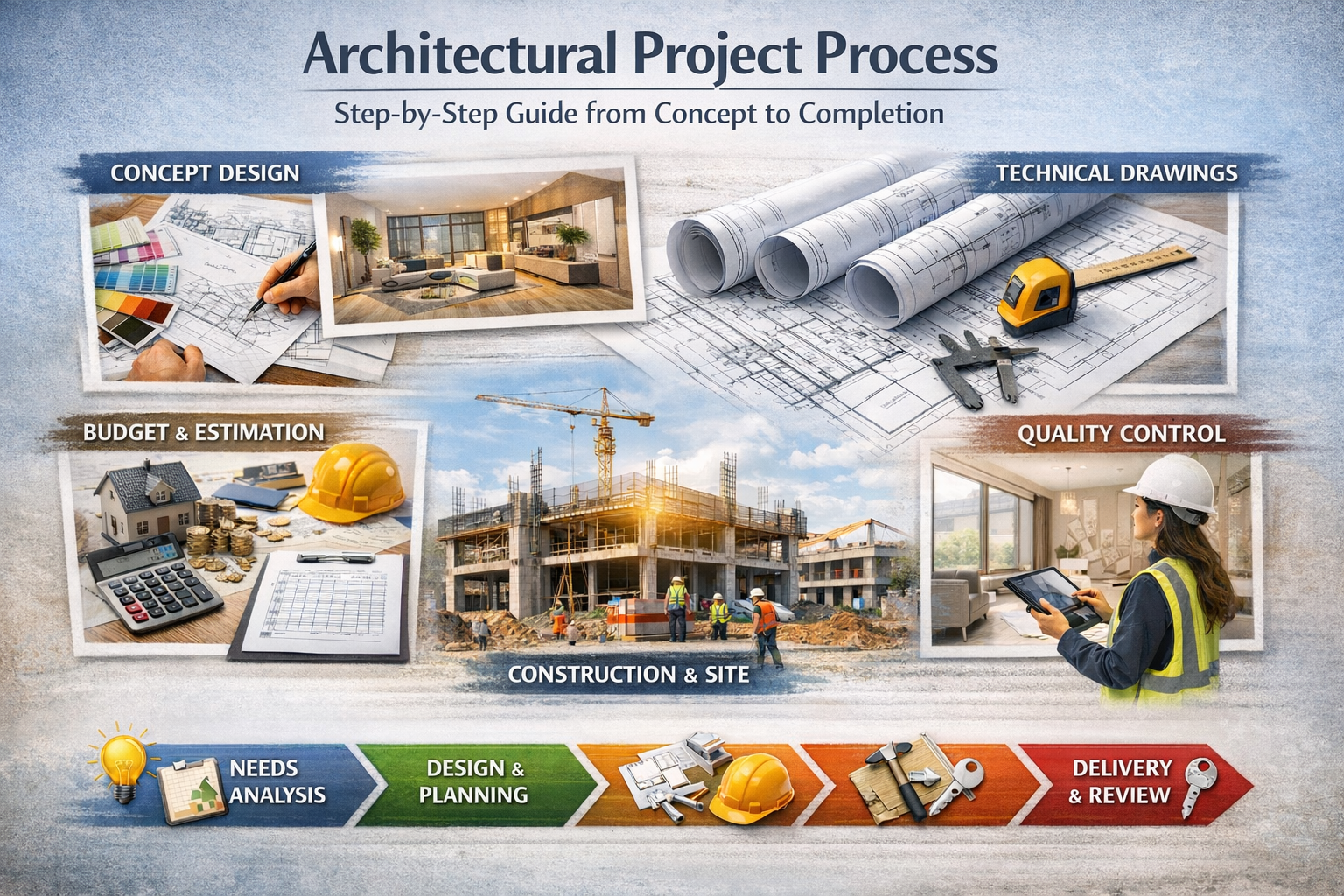
An architectural project is not only about “a beautiful drawing”. It succeeds when needs are correctly defined, the budget is controlled, disciplines are coordinated, and the work is executed properly on site. In this guide, you will find a clear and practical roadmap from the first idea to turnkey delivery.1) Needs Assessment and Brief
Everything starts with the right questions. If the scope, goals, and constraints are not clarified at the beginning, schedule and cost overruns are almost inevitable.
Key items to define at this stage:
- Purpose of the space (home, office, store, spa, etc.)
- User profile and daily-use scenario
- Area, number of rooms, and functional requirements
- Style expectations (modern, classic, Japandi, etc.)
- Budget range and priorities (e.g., kitchen first, facade second)
- Time targets (handover date, move-in plan)
- Existing conditions (renovation or new build, legal/technical constraints)
Output: Written brief + existing plans/photos + target budget and draft schedule.
2) Site Survey, Measurements, and Existing-Conditions Analysis
This is one of the most critical phases, especially for renovations. Measurement errors and hidden MEP/structural issues discovered later can affect the entire design.
Core checks include:
- Accurate dimensions, levels, and column/shear-wall locations (if any)
- Electrical and mechanical infrastructure (wastewater, clean water, ventilation)
- Moisture, cracks, and level irregularities
- Building regulations/permit constraints (party walls, common areas, etc.)
Output: As-built plan (survey) + risk list (potential surprises).
3) Concept Design (Idea Development)
The concept defines the project’s character and design language. Instead of going straight into technical details, the goal is the right layout and the right atmosphere.
Typical concept deliverables include:
- Layout alternatives (plan options)
- Circulation (entry-living-private flow)
- Main material and color decisions
- Lighting approach and overall ambiance
- Functional optimization (storage, ergonomics)
Output: 1-3 plan options + moodboard + rough 3D/visuals.
4) Schematic Design (Design Consolidation)
This phase is where decisions are finalized. The plan converges into one direction and coordination with MEP disciplines begins.
Items typically finalized:
- Final plan and room functions
- Wall/door locations and clear circulation
- Kitchen/bathroom layouts (aligned with services)
- Furniture dimensions and primary placements
- Preliminary quantity takeoff and cost check
Output: Final plan + basic sections/elevations + updated budget estimate.
5) Construction Documents (Technical Drawings and Details)
Construction documents are the drawing set detailed enough for the site team to execute without ambiguity. They are essential for quality.
Typical sheets include:
- Dimensioned architectural plans
- Sections and elevations
- Door/window details (if applicable)
- Flooring, ceiling, and lighting plans
- Kitchen/bathroom details and joinery drawings
- Material and product list (technical specifications)
Output: Site-ready drawing set + specifications + clear documents for tendering.
6) Quantity Takeoff, Cost Plan, and Budget Finalization
Budget drift often comes from late decisions and the lack of a proper takeoff. Quantity takeoff defines the work in measurable units; the cost plan assigns costs to those items.
To keep the budget under control:
- List each item separately (tiles m², paint m², cabinetry linear meters, etc.)
- Request alternative quotes (Option A material / Option B material)
- Ask for a clear split between labor and materials
- Include site overheads (transport, protection, cleaning, debris removal, etc.)
Output: Itemized budget + procurement plan + draft payment schedule.
7) Tendering and Contractor Selection
Selecting the right team is one of the most decisive factors for quality. The cheapest offer can easily become the most expensive outcome.
What to check when selecting:
- Past projects and real references/photos
- Program and duration (how many days?)
- Warranty scope (what is covered and for how long?)
- Is the scope clear? Is there an “included/excluded” list?
- Contract clauses (penalties, change-order process, payment plan)
Output: Selected contractor + signed contract + work schedule.
8) Site Setup and Mobilization
Before work starts, site discipline must be established. When this stage is well planned, problems throughout the project reduce significantly.
Key actions at the start:
- Site handover record
- Protection measures (floors, elevator, common areas)
- Material storage and logistics plan
- Health and safety measures
- Sample approval process (tiles, flooring, paint color, etc.)
Output: Site start-up + approved samples + clear work sequence.
9) Site Supervision, Quality Control, and Change Management
A small-looking mistake on site can turn into a major cost later. Supervision ensures the work matches the design and catches errors early.
Critical checkpoints:
- Waterproofing and slopes (especially bathrooms)
- MEP routes and equipment positions
- Floor flatness and screed quality
- Tiling execution (grout lines, leveling)
- Joinery dimensions and installation tolerances
- Lighting points and switch-socket locations
Change management: If changes are requested, the impact on additional cost and time must be documented in writing.
10) Final Inspections, Handover, and Warranty
Handover day is not just receiving keys. Use a checklist to record defects and incomplete items, and sign a handover report.
Examples of handover checklist items:
- Door/window adjustments and locks
- Paint surfaces (marks, waviness, cracks)
- Tile and grout lines, silicone sealing
- Electrical tests (RCD, lighting)
- Plumbing tests (leaks, flow)
- Cabinet door alignment, drawer slides/hinges check
Output: Handover report + warranty documents + maintenance recommendations.
5 Frequently Asked Critical Questions
1) Can construction proceed without an architectural project?
It can, but the risks of cost increases, lower quality, and constant revisions rise sharply.
2) Where do budgets slip most often?
Service changes, wet areas, joinery/furniture, and items assumed to be “included”.
3) What is the biggest surprise in renovations?
Hidden service issues, moisture, slope problems, and structural/column locations.
4) Are construction documents necessary?
Yes, if you want quality and speed; especially for bathroom, kitchen, and joinery details.
5) How can the schedule be protected?
With a clear work sequence, timely procurement, and written change control.
Conclusion
An architectural project process is a chain: it starts with a strong brief, matures through concept-schematic-construction documents, stays under control through quantity and cost discipline, and succeeds with proper site supervision. If one link weakens, time, cost, and quality are all affected.
-
architectural project process
-
architectural design stages
-
concept design
-
execution project
-
architectural drawing
-
building permit project
-
architecture guide
-
construction process